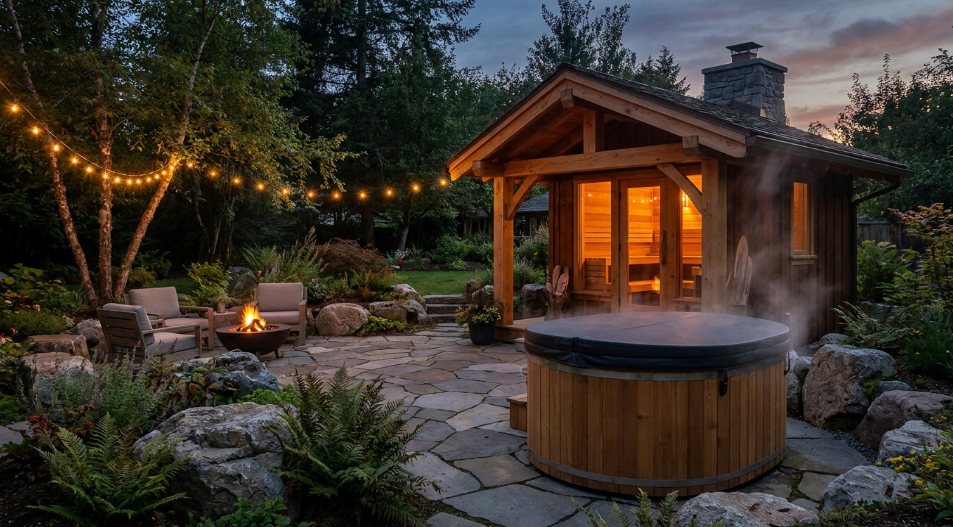
A DIY kit makes sense when the site is already level, the heater needs 15 amps or less on an existing circuit, and you have two people and a weekend to spend on assembly, typically saving $800 to $2,000 over hiring it out. A professional install is the safer call whenever the heater needs a dedicated 240-volt circuit, the ground needs grading or a poured pad, or the barrel has to go somewhere with tight access like a narrow side yard.
Step 1: Assess the Site Before You Decide Anything
Site conditions decide more of this question than skill level does. A flat, already-cleared spot with existing gravel or a paver base is a straightforward DIY setup regardless of experience. A sloped yard, soft soil, or a spot that needs a poured concrete pad changes the math fast, since pad work alone can run $500 to $1,500 depending on size and local labor rates. Walk the exact footprint with a level before ordering anything, not after the barrel arrives on a pallet in your driveway. Check clearance from the house, fence line, and any overhead branches too, since most manufacturers specify a minimum gap from combustible structures that a survey by eye tends to underestimate. A tape measure and twenty minutes outside will tell you more about which install path fits your yard than any online calculator.
Step 2: Know What a DIY Kit Actually Involves
A barrel sauna kit arrives as pre-cut, numbered staves, roof sections, and hardware, along with an assembly manual. Most owner-assembly kits are designed so two people with a rubber mallet, a drill, a level, and basic hand tools can put the shell together in a weekend, roughly twelve to eighteen hours spread across two days. The heater install itself is usually simple if it plugs into an existing outlet rated for the load. Where DIY assembly gets harder is holding curved staves plumb while fastening the roof, which is genuinely a two-person job. Attempting it solo is possible but slow and more likely to leave gaps that let heat escape later. Read through the full manual before the delivery truck arrives rather than after, since a handful of kits require the foundation pad to be built to an exact footprint before the first stave goes on, and discovering that on assembly day loses an entire afternoon.
Step 3: Where Electrical Work Usually Forces a Professional Call
Most heaters above 6 kilowatts need a dedicated 240-volt circuit, and running new wire from an electrical panel is not a reasonable weekend DIY task for anyone without an electrical license, both for safety reasons and because most local codes require a licensed electrician to pull the permit anyway. Even smaller heaters that plug into a standard outlet still need a circuit that is not shared with other high-draw appliances, since a shared circuit will trip repeatedly once the heater is running at full output. If a licensed electrician needs to run new wire from the panel, that portion of the project should go to a professional regardless of how comfortable you are with the rest of the build.
Step 4: Weigh the Real Cost Difference
A DIY kit assembly saves the labor line, which typically runs $500 to $1,200 for shell assembly alone, more if electrical and pad work are bundled in. Against that, factor in the tools you may need to buy or rent, the time off a weekend, and the real risk of a mistake, like a misaligned door frame, that costs money to fix later. Before deciding, it is worth pricing both the unit and the professional install quote side by side. Retailers that list installed pricing alongside DIY kit pricing, such as the SweatDecks catalog, make that comparison easier than calling around for quotes on a bare kit price alone.
Step 5: Match the Install Method to Your Own Skill and Time
Someone who has built a deck, hung drywall, or handled basic home electrical work before will likely find shell assembly straightforward. Someone tackling their first real construction project might still manage it, but should budget extra time and expect a learning curve on the first few staves. If your available time is tight, a delayed DIY project sitting half-finished in the yard for weeks is its own kind of cost, both in weather exposure to unsealed wood and in simply not using the sauna you paid for. A middle option worth asking about is a hybrid arrangement, where a crew handles the pad and electrical work and the household finishes shell assembly over a weekend once those pieces are ready. Not every seller offers it, but it can split the cost and the labor in a way that suits a household with some skills but limited free time.
Does Getting the Install Right Actually Matter for the Health Claims?
It matters mostly because a sauna that is hard to use, drafty, slow to heat, or half-finished tends to get used less often, and frequency is the variable the research keeps circling back to. A systematic review of regular dry sauna bathing summarized associations with cardiovascular markers across a range of studies, and an older but often-cited review in The American Journal of Medicine outlined both the benefits and known risks of the practice. A more recent 2023 review looked at sauna bathing alongside other lifestyle habits and found the combination associated with additional benefits beyond either alone. These are associations from observational research, not proof that any one sauna, however well installed, prevents disease. A properly sealed, correctly wired sauna simply removes the friction that keeps a household from using it consistently enough for that pattern to apply.
Frequently Asked Questions
Can one person assemble a barrel sauna kit alone? It is possible but not recommended. The curved staves and roof sections are heavy and awkward to hold solo, so most manufacturers recommend two people for assembly.
How much does professional installation typically cost? Assembly-only labor runs $500 to $1,200. With electrical and pad work included, total professional installation often lands between $1,500 and $3,500.
Do I need a permit to install a barrel sauna? It depends on local code and whether electrical work is involved. Check with the local building department before ordering.
How long does a DIY kit take to assemble? Most kits take a full weekend, roughly twelve to eighteen hours, for two people with basic tools.
References
- Clinical Effects of Regular Dry Sauna Bathing: A Systematic Review, Evidence-Based Complementary and Alternative Medicine, 2018
- Benefits and risks of sauna bathing, The American Journal of Medicine, 2001
- Does the Combination of Finnish Sauna Bathing and Other Lifestyle Factors Confer Additional Health Benefits? A Review of the Evidence, Mayo Clinic Proceedings, 2023